 10 out of 10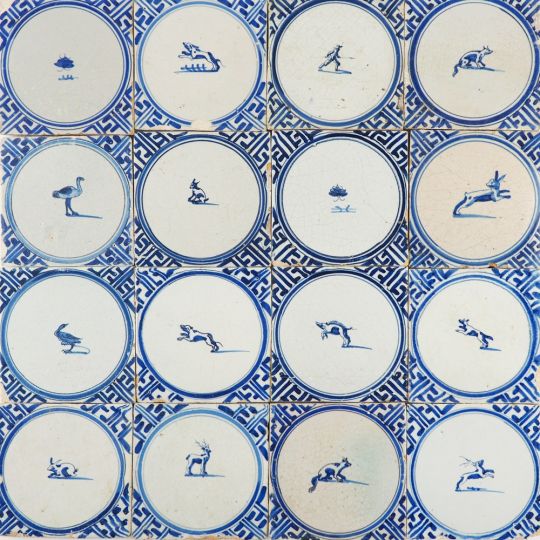

Overview
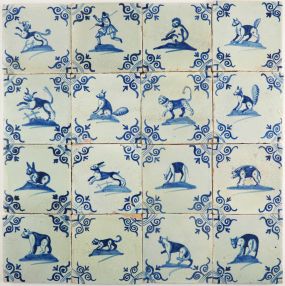
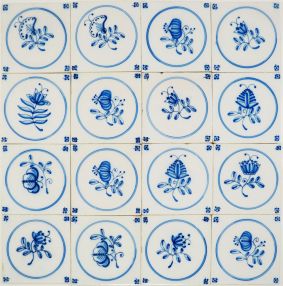
These tiles, dating from the early 17th century (circa 1640), show a variety of animals painted in blue. The scenes include a varied selection of fauna such as a boar, duck, butterfly, deer and fox, each painted within a circular frame. The tiles are further enriched with Wanli-inspired corner decoration, reflecting the strong influence of Chinese porcelain on 17th-century Dutch tile design. Each tile is hand-painted, giving every wall composition a lively and authentic historic character.
Condition and preparation
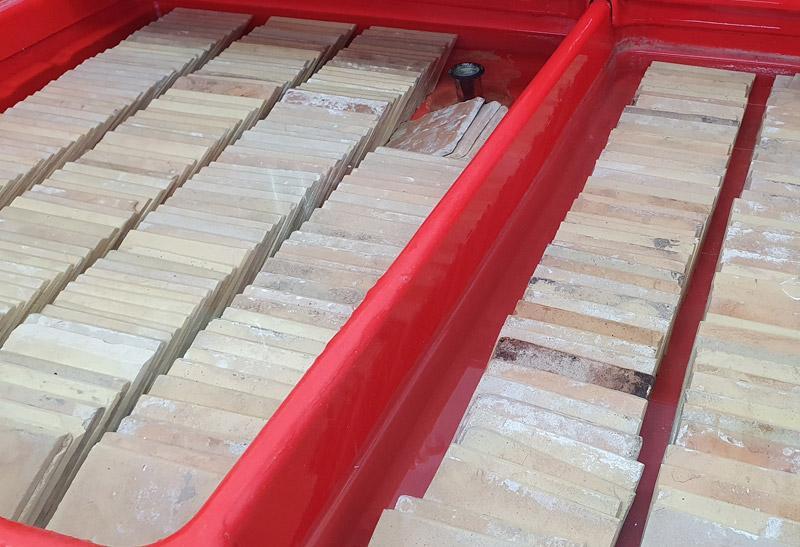
All tiles are reclaimed antiques and are prepared for reuse. They have been cleaned, desalinated and any soot residues have been removed. Each order is hand-selected to ensure a consistent appearance in colour tone, glaze and surface character. If your project requires cut tiles, designated tiles with more visible imperfections can be supplied at a reduced price, helping preserve intact historical tiles.
Tile variety and stock
This collection consists of small animal and insect scenes, all executed in a cohesive 17th-century style with circular framing and matching Wanli-inspired corner decoration. Representative images give a clear impression of the overall appearance. Availability may vary. For the most up-to-date stock levels, please refer to the quantity indication (pcs) shown on the right-hand side of this page.
Complementing tiles
These tiles are best showcased when used together, as the circular frames and Wanli corner decoration align to form a visually coherent wall composition. They can also be combined with the same type of 17th-century Delft tiles depicting larger animals, allowing for a varied yet stylistically consistent wall design. In addition, the tiles pair well with plain white antique tiles (witjes), both first and second quality, which can be used to introduce rhythm or visual balance.
Tile size
Each tile measures approximately 13 × 13 cm (5.1” × 5.1”) and 1 cm / 0.4” thick. As the tiles are handmade and antique, slight variations in size and thickness are to be expected and contribute to their authentic character.
How to order
You can request a quote directly on this page or contact us for assistance with tile selection and layout advice. Our specialists will gladly help you assemble a balanced and visually engaging wall composition.
Samples
Samples can be provided on request, allowing you to review colour tone, glaze and surface quality before placing a larger order.
Product disclaimer
Antique tiles naturally vary in colour tone, glaze, size and surface. These variations reflect their historic production and form part of their timeless appeal. While complete uniformity cannot be guaranteed, all tiles meet our quality standards and are suitable for most indoor wall applications.
Available as reproduction
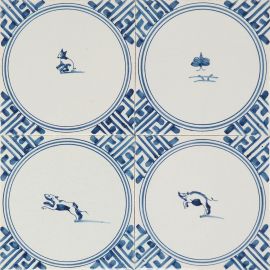
Of this Delft tile we offer an authentic hand-painted reproduction series. Available in up to 12 shades of white and always hand-painted by one of our five artists!
-
 P-46 | Animals$69.01
Buyers information
Specifications
| Inventory number | WTS 78 |
|---|---|
| Tile type | Wall tile |
| Period | 1640-1660 |
| Century | 17th century |
| Production area (city) | Harlingen |
| Made in | the Netherlands |
| Quantity indication (pcs) | 20+ |
| Size per tile (approx.) | 13 by 13 cm's / 5.1" by 5.1" |
| Tile thickness (approx.) | 1 cm / 0.4" |
| Quantity per M2 / SF | 60 tiles per m2 / 5.5 tiles per SF |
| Suitable for | Walls, kitchens, backsplashes, ceilings, fireplace surrounds, fireplace interior (when not exposed to open fire), bathrooms. |
| Not suitable for | Floors, open fire, outdoors, wet rooms (shower walls etc.) and swimming pools. |
| Sealer | The tiles do not require a sealer from a functionality perspective. |
| VAT and/or Import duties | Antique tiles are sold within the margin scheme within the Europe Union. Antique tiles that are ordered from outside the European are often imported at a special rate (e.g. 5% UK). |
About Regts - Delft Tiles
We are a family firm specialized in Delft tiles. Our stock covers the entire production period, which started around 1570 and ended just after 1900. If you are interested in working with us, please always feel free to get in touch.About usContact us